
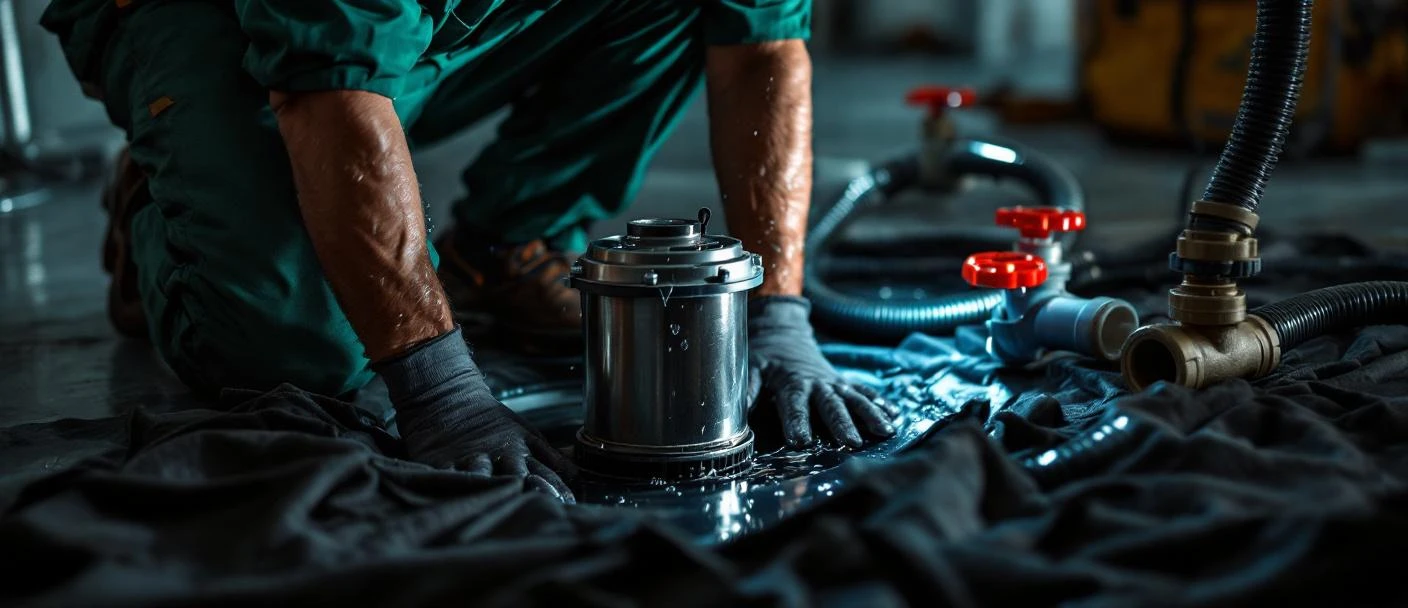
Sump Pump Repair Chattanooga TN — when basement water is rising and the pump won’t start, plumbers in our network arrive 24/7 with portable utility pumps for emergency drawdown and replacement primary, pedestal, battery backup, and water-powered pumps in inventory. From single float-switch repair to full pit replacement with dual-pump redundancy. Hamilton County clay-soil basements get extra attention because the pump load is higher here than in dry-soil markets.
A sump pump is a piece of equipment that almost everyone forgets exists — until it fails. The failure mode is rarely subtle: water rising in the pit, water reaching the basement floor, water spreading toward stored items and finished walls. Stopping it requires either reviving the existing pump or deploying a temporary pump while the permanent replacement is installed.

What Sump Repair and Replacement Costs in Chattanooga
Single-component fixes (float switch, check valve) run $185-$345 . Pump replacement runs $485-$1,150 depending on horsepower and volute material. Battery backup additions run $685-$1,250 . Water-powered backups run $885-$1,650 . Full pit replacement with dual-pump redundancy runs $2,650-$4,850 . Pricing depends on pit access, basement layout, and discharge line condition.
Sounds, Cycles, and Smells That Tell You the Pump Is Failing
Warning Signs to Watch For
- Pump runs continuously without water entering the pit
- Pump cycles every few minutes during normal weather
- Loud grinding or rattling during pump operation
- Burnt-electrical smell near the pump cord or outlet
- Sewage smell from the pit (failed sealed cover or wrong pump type)
- Visible iron-bacteria fouling (orange slime in pit)
- Pump motor warm to touch when not running
- GFCI tripping every time the pump cycles
The continuous-run symptom usually means the float switch is stuck up. The fix is float switch replacement, but if the pump has been running dry for hours, the motor may be damaged. Diagnostic test: turn off the breaker, lift the float manually, restore power, observe pump cycle. If the motor responds normally with manual float operation, the float is the failure. If the motor is sluggish or doesn’t start, replacement is needed.
Below-grade fixtures use ejector pumps which are covered separately under our sewer pipe repair scope.
How Our Plumbers Diagnose Pump, Float, and Discharge Issues
- 1
Pit Drawdown Test
Add water if pit is dry; measure pump-down rate to verify pump capacity.
- 2
Amp Draw Reading
Amp-clamp meter on power cord during pump cycle reads motor health.
- 3
Float Test
Manual float operation verifies switch response and pump start.
- 4
Check Valve Verify
Pump shutoff with discharge full — water should not flow back into pit.
- 5
Discharge Inspection
Outdoor termination check, slope verification, freeze-prevention assessment.
- 1
Pit Drawdown Test
Add water if pit is dry; measure pump-down rate to verify pump capacity.
- 2
Amp Draw Reading
Amp-clamp meter on power cord during pump cycle reads motor health.
- 3
Float Test
Manual float operation verifies switch response and pump start.
- 4
Check Valve Verify
Pump shutoff with discharge full — water should not flow back into pit.
- 5
Discharge Inspection
Outdoor termination check, slope verification, freeze-prevention assessment.
Submersible vs Pedestal vs Battery Backup Compared
Submersible pumps (Zoeller M53, M267; Liberty Pumps 257, 287, 290; Wayne WSS30VN; Hydromatic V-A1) sit fully in the pit, sealed motor, oil or water cooled. Quieter, more efficient, more expensive. Cast iron volute lasts 10-12 years; thermoplastic volute lasts 5-7 years.
Pedestal pumps (Zoeller M53, Wayne CDU800) have the motor on a column above the pit, with the pump impeller submerged. Older technology, more failure points, but motor is accessible without pulling the pump. Common in 37402 and 37405 historic basement installs.
Battery backup pumps (Zoeller 508, Wayne ESP25, Basement Watchdog Big Dog) install in the same pit alongside the primary, run on 12V DC from an AGM or lead-acid battery. Activate when primary fails or when power is lost.
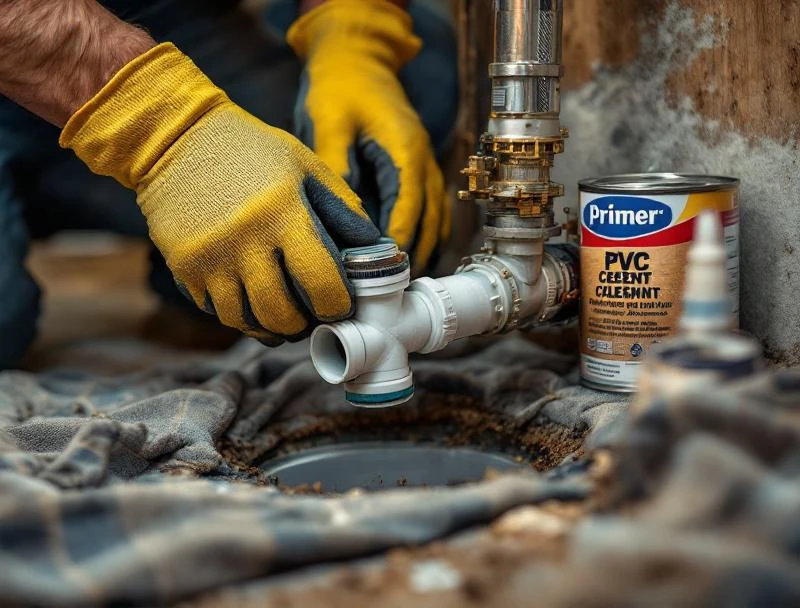
Pedestal Pump Replacement
Pedestal pumps work in older legacy installs but new construction rarely uses them. When a 37402 historic-basement pedestal pump fails, replacement options include like-for-like pedestal or upgrade to submersible. Submersible upgrade is common because it’s quieter and more reliable, though it requires pit access for service.
Submersible Pump Replacement
Submersible replacement scope: shut breaker, disconnect discharge pipe (Fernco coupling makes this easy), lift pump out (use the rope tied to the handle — never pull on the cord), inspect pit, install new pump with check valve and Fernco at discharge, restore power, test cycle.
For 37411 ranches and 37416 homes with high-iron well water (private well rather than Tennessee American Water service), iron-bacteria fouling can affect pumps within 5-7 years. Cast-iron-volute pumps tolerate iron bacteria better than thermoplastic.
Battery Backup Install
Zoeller 508 ProPak98 is the standard add-on backup pump in Chattanooga residential installs. Installation scope: install backup pump in primary pit (or adjacent if pit is too small), mount battery in dry box near pit, install charger/monitor, wire to GFCI outlet, test cycle on simulated power loss.
The battery rating determines runtime: AGM batteries (Group 27 typical) provide 6-12 hours of intermittent pumping during outage. Larger battery banks (dual or triple Group 31) extend runtime for multi-day outages common to ice-storm events on Signal Mountain (37377).
Water-Powered Backup
Liberty SJ10 SumpJet and Basepump RB-750 use Tennessee American Water service pressure (40-60 PSI typical) to power a venturi pump that lifts pit water. No electricity required, no battery to maintain. Trade-off: requires water service to operate (won’t work during a water main break), uses 1-2 gallons of city water per gallon of pit water pumped.
Pit Cleaning
Sump pits accumulate sediment, iron bacteria, and debris over years. Cleaning scope: remove pump, remove sediment with wet-vac, inspect pit liner and weep holes, treat iron bacteria with chlorine bleach if present, reinstall pump. $285-$485 typical.
Check Valve Replacement
Swing check valves and silent (spring-loaded) check valves prevent water from flowing back into the pit when the pump shuts off. Failure modes: flapper stuck open (water cycles back, pump short-cycles), flapper stuck closed (pump can’t pump out), spring failure (silent style only).
Float Switch Replacement
Tethered floats, vertical floats, and electronic floats (Levalert) all detect water level and trigger pump start. Failure modes: float caught on pit wall or pump cord (use cable tie to keep cord clear of float travel), diaphragm pressure switch failure, electronic float sensor fouled by iron bacteria.
Basement filling with water?
Top-priority dispatch — call now and we'll deploy emergency drawdown equipment while routing the replacement pump.
Discharge Line Freeze Prevention
Chattanooga’s 8-12 freeze days per year cluster into 4-6 multi-day cold snaps. Discharge line frozen during a cold snap causes pump burnout — the pump runs continuously trying to push water against the ice plug. IceGuard pop-off fittings (Sioux Chief, similar products) install in the discharge line above grade and pop open if line pressure builds, preventing pump damage.
For homes on Signal Mountain (37377) and Lookout Mountain TN (37350) with longer freeze events, heat-trace cable on the discharge line is the durable preventive scope.
Sump Pit Alarm Install
Basement Watchdog BWA, Zoeller A-Pak, and Wi-Fi-monitored alarms detect high water in the pit before flooding starts. The Wi-Fi systems push notifications to your phone when the alarm triggers — meaningful for second-home or vacation-rental properties. Install runs $285-$485 .
Dual-Pump Redundant Systems
For 37343 Hixson lakeside basements with consistently high water tables, dual-pump systems provide redundancy without relying on battery backup alone. Two pumps in a 24” pit liner with an alternating relay — lead pump handles normal load, lag pump activates if water rises above the lead’s normal cycle. If the lead fails, the lag carries 100% of the load.
High-Water-Table Mitigation
When the pump is constantly running because the water table is at or above basement-floor level, the durable fix isn’t a bigger pump — it’s exterior drainage. Interior weeping tile (perimeter drain to the pit) handles inboard water; exterior French drain handles outboard water. Sump pumps work best when they’re handling residual water, not primary infiltration.
Basement Waterproofing Tie-In
Sump pumps are component of larger basement waterproofing system. Dimple-mat membrane on interior walls, urethane crack injection on visible cracks, foundation sealer on exterior, sub-slab drainage tied to the pit. Whole-system approaches outperform pump-only approaches when water intrusion is significant.
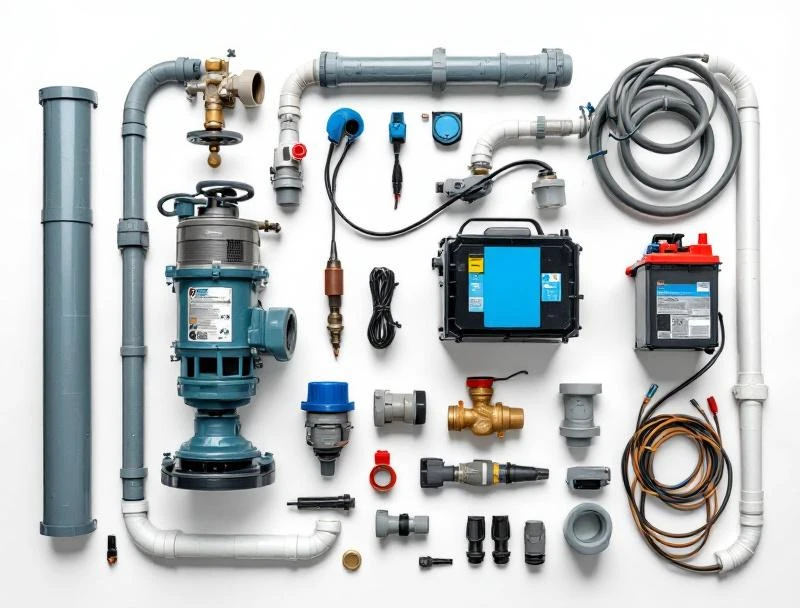
Why Hamilton County Clay Soil Drives Pump Workload Hard
Clay-soil pockets in 37343 Hixson and parts of 37363 Ooltewah hold water against foundations longer than sand or loam. The hydrostatic pressure pushes water through wall cracks, around pipe penetrations, and up through the slab. Pumps in clay-soil basements run more cycles per year and wear out faster than pumps in well-drained soil.
The implication: cast-iron-volute submersible pumps with annual maintenance are the right choice for 37343 lakeside addresses. Thermoplastic-volute economy pumps don’t last in this duty cycle.
Foundation-side floor drains tying into the pump pit may need drain cleaning rather than pump replacement.
Tennessee Code on Discharge Routing and Sump Pit Sizing
Sump discharge shall terminate to grade or to a permitted storm drain — never into the sanitary sewer. The discharge line must slope away from the foundation and terminate at least 10 feet from the building. Code §1113.1.2 sets minimum sump pit sizing requirements; many 1970s-era 37411 pits at 14” diameter are below-spec for newer pump models that require 18” minimum for proper float operation.
Spring rain peaks April-May; pump failures cluster then
Chattanooga’s spring rainfall pattern peaks April-May. Pump failures cluster heavily during these months, particularly in basements that haven’t seen rain since the previous fall. Annual pre-spring pump testing — manual float lift, drawdown rate measurement, check valve verification — prevents most April-May emergencies.
Winter discharge issues are addressed under discharge-line freeze prevention in our frozen pipe scope.
When You Need a Backup Pump and When Primary-Only Is Enough
| Situation | Primary Only | Add Backup |
|---|---|---|
| Unfinished basement, low value at risk | Yes — primary sufficient | — |
| Finished basement with stored valuables | — | Yes — battery or water-powered |
| Lakeside 37343 Hixson, high water table | — | Yes — battery or dual primary |
| Frequent ice-storm power outages (37377) | — | Yes — battery backup essential |
| Vacation home or second residence | — | Yes — Wi-Fi alarm + backup |
| Reliable EPB power, dry basement | Yes — primary sufficient | — |
| Multi-pump redundancy already installed | — | Already covered |
| First-time water intrusion event | Replace primary first | Add backup at next service |
If water keeps appearing despite a working pump, leak detection identifies whether the source is supply rather than groundwater.
Why a Pump Running During a Sunny Day Means Trouble Below
A sump pump running on a dry, sunny day is reporting that water is entering the pit even when it shouldn’t. Three causes: check valve stuck open (the pump is fighting itself), groundwater spring or perched water table at unusual depth, or a leaking supply line dumping water near the foundation. The diagnostic order matters because chasing the wrong cause wastes time. Check valve test first (manual verification), then water-source assessment, then supply-line leak detection.
Brands We Service
Sump Pump Brands & Components
Chattanooga uses a separate sanitary and storm sewer system. Sump discharge must terminate to grade or a permitted storm drain — never to the sanitary sewer. EPB-served homes generally have stable electric service, but multi-day winter ice-storm outages drive battery-backup demand on Signal Mountain (37377) and Lookout Mountain TN (37350). Iron bacteria fouling (orange slime in pit) is common in 37363 Ooltewah and 37302 Apison wells — affects pumps faster than city-water pits.
Service Cost Calculator
Quick Estimate
Estimates are approximate. Call for written quote.
What Every Service Call Includes
What Every Service Call Includes
- Written estimate before any work begins
- Upfront pricing with no hidden fees
- Bonded and insured plumbers in our network
- Background-checked plumbers dispatched to your home
- Same-day emergency response across Hamilton County
- Workmanship stands behind the repair
Stats
When a pump fails during heavy spring rain, our 24/7 plumber team rolls out replacement pumps and battery backups on the same truck.
What This Service Costs in Chattanooga
| Service | Chattanooga Range | Time Required |
|---|---|---|
| Float switch replacement (37343 Hixson) | $185 – $285 | 30 – 90 min |
| Check valve replacement | $185 – $345 | 1 – 2 hours |
| Submersible pump replacement (1/3 HP, 37402) | $485 – $885 | 2 – 3 hours |
| Submersible pump replacement (1/2 HP cast iron, 37411) | $685 – $1,150 | 2 – 3 hours |
| Pedestal pump replacement (older 37405) | $485 – $785 | 2 – 3 hours |
| Battery backup install (Zoeller 508) | $685 – $1,250 | 3 – 4 hours |
| Water-powered backup install (Liberty SJ10) | $885 – $1,650 | 3 – 5 hours |
| Pit cleaning + sediment removal | $285 – $485 | 1 – 2 hours |
| Discharge line freeze-prevention (IceGuard) | $185 – $285 | 1 – 2 hours |
| Dual-pump redundant install (high water table) | $1,650 – $2,850 | 1 day |
| Sump pit alarm install (Wi-Fi monitor) | $285 – $485 | 1 – 2 hours |
| Full pit replacement (24" liner + pumps) | $2,650 – $4,850 | 1 – 2 days |