
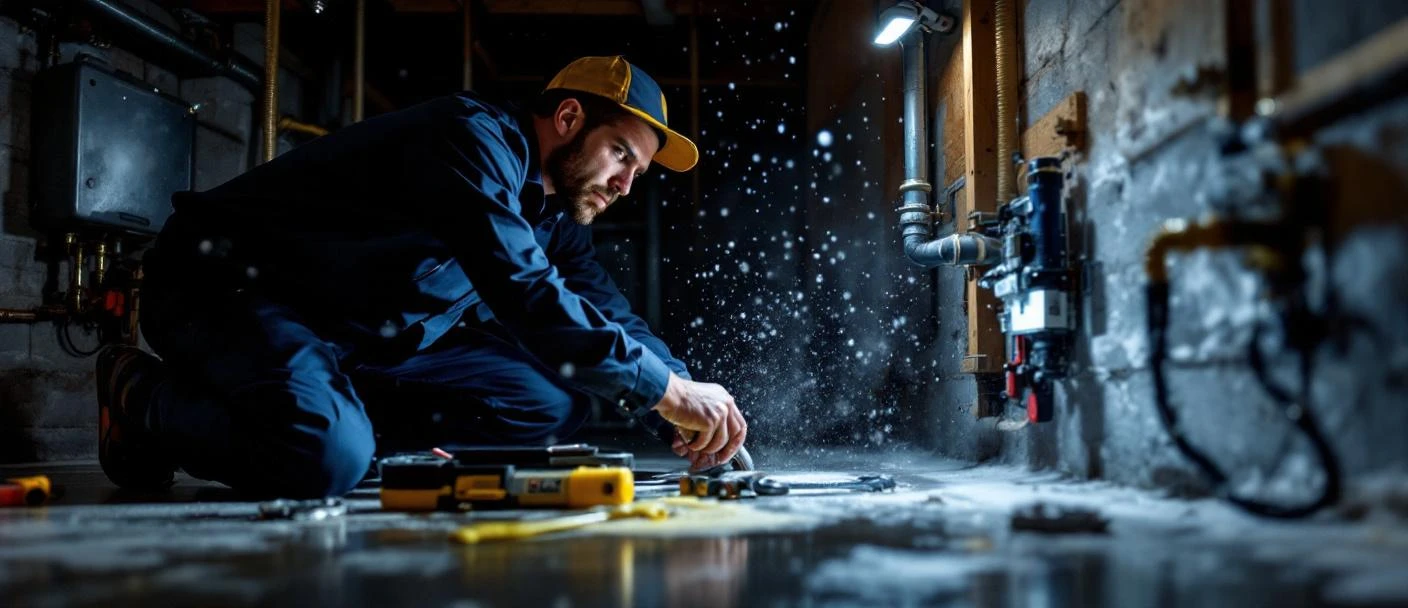
Gas Line Repair Chattanooga TN — for active leaks, generator installs, tankless conversions, or outdoor kitchen runs, plumbers in our network arrive with combustible gas detectors, manometers, and full pipe-threading equipment. Black iron, CSST (TracPipe, Gastite, OmegaFlex), copper, and underground polyethylene. All work permit-pulled through Chattanooga Codes & Construction Services and pressure-tested to Tennessee §406 requirements.
Gas line work is the highest-stakes plumbing scope because the failure mode is ignition, not just water damage. Tennessee adopts NFPA 54 (National Fuel Gas Code) with state amendments, and every gas line repair or new install requires permitting, pressure testing, and inspection sign-off before the line is returned to service. The plumbers in our network handle the regulatory side as part of the scope so you don’t navigate the permit process yourself.
If you smell gas, leave first
Leave the building immediately. Don’t operate light switches, phones, garage door openers, or anything that creates a spark. Once outside, call Chattanooga Gas Company emergency line. Then call us. Gas Company shuts service at the meter and confirms the leak is on the home side; we repair the home-side line.
What Gas Line Work Costs in the Chattanooga Area
Single-joint black iron repairs run $285-$485 . CSST section replacements run $385-$685 . Generator gas lines run $985-$2,250 . Pool heater lines run $1,250-$2,650 . Tankless conversion gas line upsizes run $685-$1,650 . The wide cost range reflects very different scopes — leak detection alone is a sub-$350 visit, while a new 50-foot line to a pool heater with permit and inspection is a full-day job.

Smell, Sound, and Bill Signs of a Gas Leak You Should Not Ignore
Warning Signs to Watch For
- Rotten egg / sulfur smell anywhere indoors or near appliances
- Hissing sound near the gas meter or any visible line
- Unexplained gas bill increase
- Dead or dying vegetation near a buried gas line in the yard
- Visible bubbling in standing water or wet soil near a buried line
- Pilot lights or flames burning yellow instead of blue (incomplete combustion)
- Persistent headaches or nausea among occupants
- Whistling sound during appliance operation
The mercaptan additive in natural gas is detectable at very low concentrations — typically below 1% of the lower explosive limit. If you can smell it, the leak is real but probably not yet at ignition concentration. Don’t wait — call.
If water and gas lines run side-by-side and the wall is wet, burst pipe repair may be running concurrently with gas service.
The Step-by-Step Procedure Our Plumbers Use to Find Leaks
- 1
Combustible Gas Detector Walkdown
Sensit Gold G2 or RKI GX-2009 sweeps every connection and joint.
- 2
Soap-Bubble Verification
At each suspect joint, soap solution applied — bubbles confirm leak.
- 3
Section Isolation
Shut at appliance valves, isolate by zone, verify pressure decay rate.
- 4
Repair Scope
Pipe section replacement, fitting tightening, or full re-pipe of compromised area.
- 5
Pressure Test
10-15 PSI hold for 30 minutes minimum per NFPA 54. Permit inspection follows.
- 1
Combustible Gas Detector Walkdown
Sensit Gold G2 or RKI GX-2009 sweeps every connection and joint.
- 2
Soap-Bubble Verification
At each suspect joint, soap solution applied — bubbles confirm leak.
- 3
Section Isolation
Shut at appliance valves, isolate by zone, verify pressure decay rate.
- 4
Repair Scope
Pipe section replacement, fitting tightening, or full re-pipe of compromised area.
- 5
Pressure Test
10-15 PSI hold for 30 minutes minimum per NFPA 54. Permit inspection follows.
The same diagnostic discipline used here is also applied in our leak detection service for water-side problems.
Black Iron, CSST, Copper, and Polyethylene Compared
Black iron (schedule 40 black steel) is the rigid traditional gas piping. Threaded malleable iron fittings, yellow-rated pipe dope and Teflon tape. Robust and durable; failure mode is thread-area corrosion in older Chattanooga homes (37411 pre-1990 ranches commonly show this).
CSST (corrugated stainless steel tubing) is the flexible modern alternative. TracPipe, Gastite, OmegaFlex CounterStrike, Pro-Flex are common brands. Faster install through tight spaces, requires specific bonding per NFPA 54 §7.13. Lightning-induced damage on improperly bonded CSST is a documented risk in Chattanooga’s thunderstorm climate.
Copper is allowed for limited gas applications under Tennessee code, primarily for short connector runs to appliances. Not used for distribution piping. Underground polyethylene (yellow PE) is required for buried gas lines per Tennessee §406 — direct-bury black iron is prohibited.
CSST bonding is enforced and a frequent code-failure point
Tennessee adopts NFPA 54 with state amendments. CSST bonding (NFPA 54 §7.13) is enforced by Chattanooga Codes & Construction Services and is a frequent source of permit failure on remodels. Older yellow-jacketed CSST requires direct bonding via 6 AWG conductor to the electrical service ground. Newer FlashShield and CounterStrike products allow modified bonding requirements per their listings.
Tennessee Code Rules for Pressure Testing and CSST Bonding
New or repaired gas piping shall be pressure tested at 1.5x working pressure or 3 PSI minimum, whichever is greater, held for 10 minutes minimum. Most residential testing happens at 10-15 PSI for 30 minutes. The test must be witnessed by an inspector for permit sign-off — Chattanooga Codes & Construction Services schedules the inspection appointment.
CSST shall be bonded to the electrical service grounding electrode system using a minimum 6 AWG copper bonding conductor. The bond connects to the CSST manifold via a bonding clamp listed for the application. FlashShield and CounterStrike jacketed products may follow modified bonding per their UL listings — verify product type before specifying bond requirements.
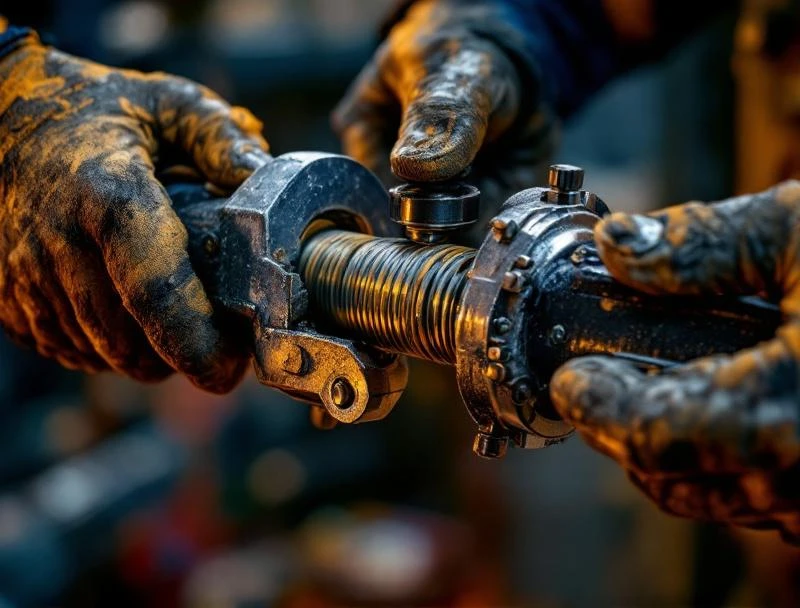
Gas Leak Detection
The combustible-gas detector walkdown is the primary diagnostic. Sensit Gold G2 reads in PPM and percent of lower explosive limit (% LEL); RKI GX-2009 covers similar range. The sniffer wand traces along every joint, valve, fitting, and appliance connection. Detectable concentration is well below ignition threshold so the diagnostic itself is safe.
Soap-bubble verification at each suspect joint provides visual confirmation. Mix dish soap with water in a spray bottle; spray on the joint with gas pressurized; bubbles indicate gas escaping. Standard practice for confirming detector findings.
Gas Pressure Testing
Pressure testing follows the Tennessee §406.4 standard: 1.5x working pressure or 3 PSI minimum, whichever is greater, for 10 minutes minimum. Most residential systems test at 10-15 PSI for 30 minutes (longer hold gives higher confidence in the seal). Mercury manometer or digital pressure gauge captures the test data.
CSST Bonding
Bonding retrofit on existing CSST that lacks proper grounding: locate the CSST manifold, install a UL-listed bonding clamp, run 6 AWG conductor from the clamp to the electrical service grounding electrode. The conductor must be continuous with no splices. Total scope $385-$585 for whole-house bonding retrofit.
Black Iron Repair
Joint failure on black iron is typically thread-area corrosion. Repair: shut gas at the meter (Chattanooga Gas coordinates), isolate the section at house-side valves, drain residual pressure, cut the bad section, thread new pipe with reaming and yellow pipe dope, install with new malleable iron fittings, pressure test, restore service.
Gas Valve Replacement
Appliance shutoff valves (1/4-turn ball valves with lever handles) and gas cocks should be located within 6 feet of every gas appliance. Replacement scope: shut gas, drain pressure, cut and remove old valve, install new with yellow pipe dope, pressure test. Tennessee code requires sediment trap (drip leg) at every appliance — many older 37402 historic homes lack this and add it during repair.
Appliance Regulator Replacement
Maxitrol RV-48, Sensus 143-80, Fisher S102 are common appliance regulators. Failure mode: diaphragm rupture (regulator vents through bonnet vent). Symptom: appliance pressure too low (yellow flames, reduced heat output). Replacement is a 1-2 hour job with appropriate model match.
Smell gas? Leave the building first.
Call Chattanooga Gas Company emergency line, then call us once you're outside and at a safe distance.
Meter-to-Fixture Line Install
New gas line runs from meter to appliance require sizing per NFPA 54 BTU load tables. The table inputs are total BTU/hr load, run length (longest run from meter to most-distant appliance), and number of fittings. Output is required pipe size. Undersized lines cause appliance starvation during peak load.
Generator Gas Line
Generac Guardian 22kW draws 312 cu ft/hr at full load. Sizing per NFPA 54 typically requires 1” line for runs over 30 feet at 7” WC inlet pressure. The install scope: locate the generator pad, route gas line from meter to generator location with code-required clearances, install dedicated regulator if pressure step-down is needed, pressure test, permit inspection.
Outdoor Grill Line
Built-in outdoor grills (37421 East Brainerd is heavy on these in patio renovations) require gas line sizing for the grill’s BTU load (typically 60,000-80,000 BTU for a 30” grill, 100,000+ for a 36”). Code requires an exterior shutoff valve within reach of the grill, and a quick-connect fitting at the appliance for serviceability.
Fire Pit Gas Line
Backyard gas fire pits use rated outdoor flex line connection at the fire-pit valve. Standard flex line is rated for outdoor exposure when the manufacturer specifies. The valve must be readily accessible (key valve handle if hidden under landscape).
Pool Heater Gas Line
Pentair MasterTemp 400 and Hayward H-Series 400 draw 400,000 BTU/hr — large enough that gas line sizing usually requires 1” or 1-1/4” line for typical 50-foot runs. The pool heater install in 37363 Ooltewah is common scope as pool installations have grown there.

Dryer Gas Line Repair
Dryer connections use stainless steel flex connectors with 6-foot maximum length per code. Common failures: kink at the wall stub-out (movement during cleaning behind dryer), corrosion at threaded ends, valve seat failure. Replacement is a 1-2 hour job.
Why Generator and Outdoor-Kitchen Lines Drive 37421 Demand
37421 East Brainerd has high-volume new construction with patio renovations. The most common gas line additions in this ZIP are: outdoor grill connections (1-2 per home), fire pit connections, generator backup gas lines (post-storm season), and tankless water heater gas line upsizes during water heater replacement.
37343 Hixson skews toward generator gas lines because of multi-day winter ice-storm outage history. Generac 22kW with full-house transfer switch is the dominant model. The gas line scope is the companion sale — without proper gas supply, the generator can’t run at full capacity.
Many tankless installs trigger Navien tankless service questions when supply pressure is borderline.
When You Should Call Chattanooga Gas First and When to Call Us
| Situation | Chattanooga Gas First | Call Us |
|---|---|---|
| Strong gas smell anywhere indoors | Yes — 911-equivalent priority | After Gas Company clears scene |
| Faint gas smell near one appliance | Optional — Gas Company will check | Yes — appliance shutoff repair |
| Hissing sound near outdoor meter | Yes — meter-side leak | After Gas Company verifies |
| Pilot won't stay lit on water heater | — | Yes — thermocouple repair |
| Appliance flames yellow instead of blue | — | Yes — regulator or supply issue |
| Need new gas line for generator | — | Yes — permit and install |
| Tankless ignition fault (Rheem 11) | — | Yes — gas pressure or sizing |
| Underground line damage (excavation) | Yes — line is buried PE | After Gas Company stabilizes |
Seasonal residences benefit from vacant-home winterization that includes both gas-appliance shutoff and water-side prep.
Brands We Service
Gas Equipment & Materials
Why a Hissing Sound Near the Meter Means Immediate Action
The gas meter set is the highest-pressure point in the residential system (street-side pressure can be 5-10 PSI before regulation to 7” WC). A hissing sound near the meter means gas is escaping at significant volume. Don’t approach with a phone or any electronic device that might spark. Step away, call Chattanooga Gas Company, get the building evacuated.
Chattanooga Gas Company (Southern Company subsidiary) supplies natural gas at 7” water column inlet pressure standard. Tennessee adopts NFPA 54 with state amendments. Permits and inspections in city limits go through Chattanooga Codes & Construction Services; outside city limits, Hamilton County administers permitting. Tennessee Department of Commerce and Insurance Board for Licensing Contractors regulates gas-piping work above certain dollar thresholds — contractors performing covered work hold the appropriate license endorsement.
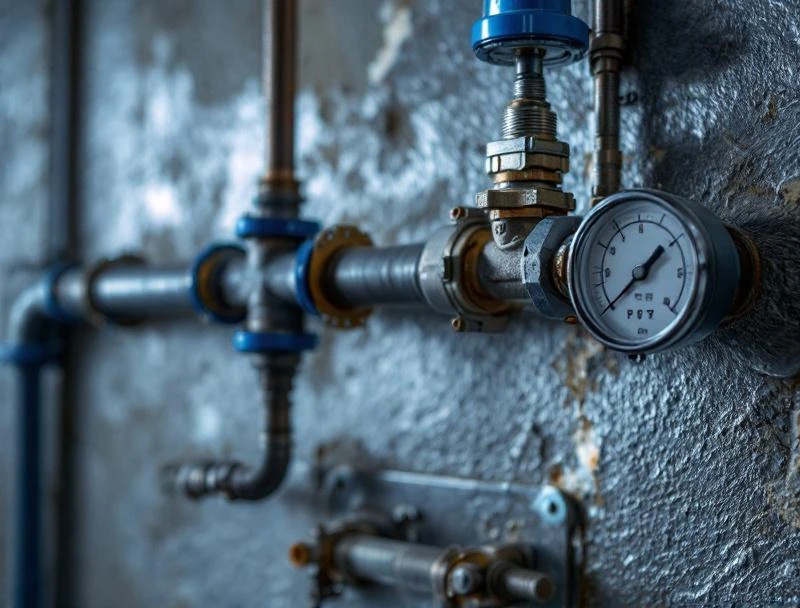
Service Cost Calculator
Quick Estimate
Estimates are approximate. Call for written quote.
What Every Service Call Includes
What Every Service Call Includes
- Written estimate before any work begins
- Upfront pricing with no hidden fees
- Bonded and insured plumbers in our network
- Background-checked plumbers dispatched to your home
- Same-day emergency response across Hamilton County
- Workmanship stands behind the repair
Stats
For suspected gas leaks any hour of the day, Emergency Plumber Chattanooga coordinates utility lockout and inspection from a single dispatch.
What This Service Costs in Chattanooga
| Service | Chattanooga Range | Time Required |
|---|---|---|
| Gas leak detection only (37411 Brainerd) | $185 – $345 | 1 – 2 hours |
| Single black iron joint repair | $285 – $485 | 1 – 2 hours |
| CSST section replacement | $385 – $685 | 2 – 3 hours |
| CSST bonding retrofit (whole-house) | $385 – $585 | 2 – 3 hours |
| Appliance gas valve replacement | $185 – $285 | 30 – 90 min |
| Sediment trap addition (code retrofit) | $185 – $285 | 1 – 2 hours |
| Appliance regulator replacement | $285 – $485 | 1 – 2 hours |
| New gas line for tankless conversion (37421) | $685 – $1,650 | 4 – 8 hours |
| Generator gas line (Generac 22kW, 37343) | $985 – $2,250 | 1 day |
| Outdoor grill line install (built-in, 37421) | $685 – $1,250 | 4 – 8 hours |
| Pool heater gas line (37363, 50 ft run) | $1,250 – $2,650 | 1 day |
| Dryer gas connection / repair | $185 – $285 | 1 – 2 hours |